

practice
A collection of contemplative practices, alongside resources designed to help you connect with people and places in our diocesan community. Whether you’re new to this, seeking to deepen your practice, or would like to connect with companions on the way, you’ll find what you need here.
visual liturgy
an invitation to prayer
There are contemplative ways to see and to listen.
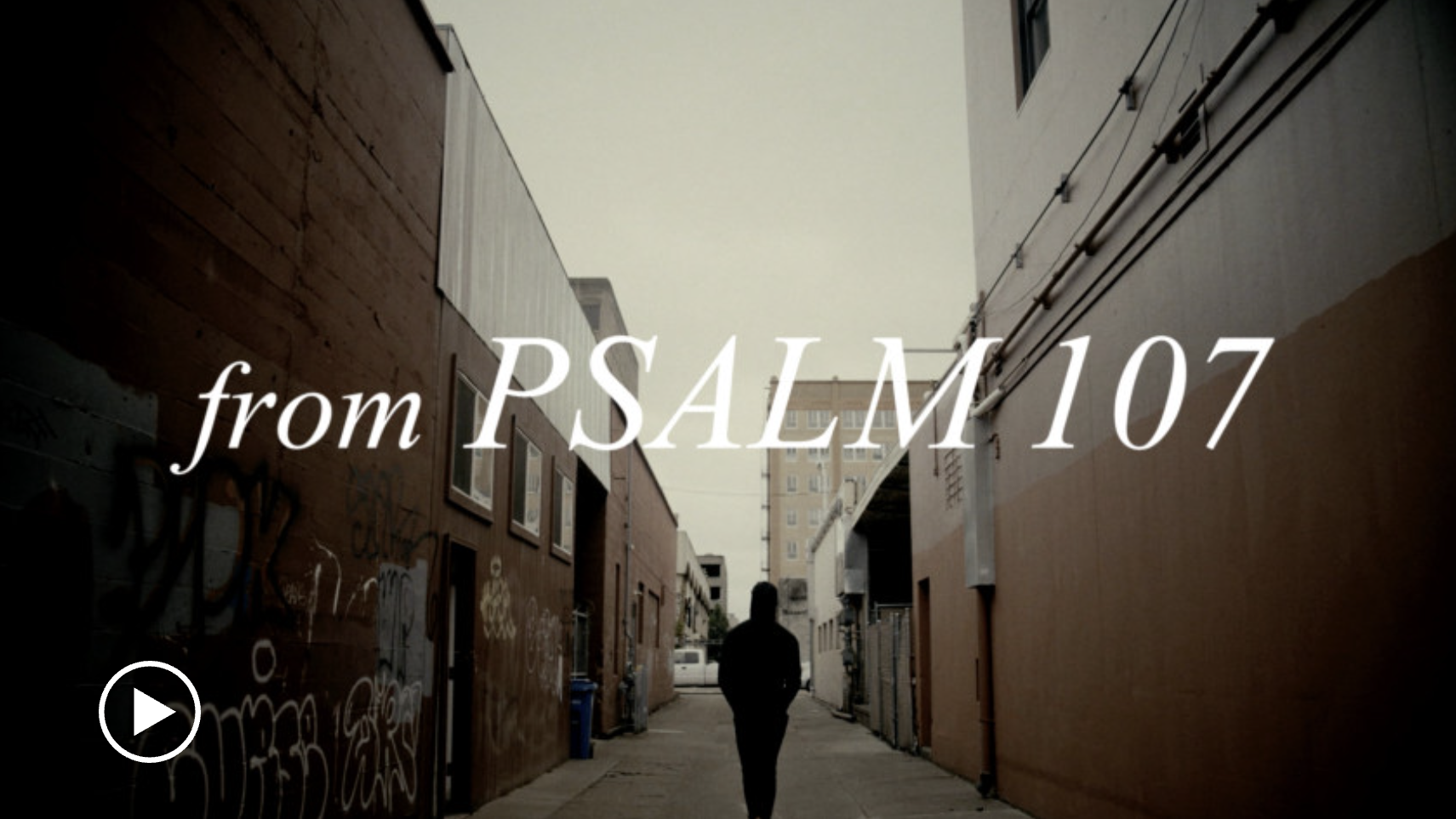
Let this visual liturgy unfold before your open eyes,
then sit in silence—even just for a few moments.
Notice what words, phrases, or images linger within you.
centering prayer
Centering prayer is a method of silent prayer that prepares us to receive the gift of contemplative prayer—experiencing the presence of the Real within us, closer than breathing or thinking. Developed by Thomas Keating and others, it’s based on the wisdom of the early Christian Desert Fathers and Mothers.
Centering Prayer Field Guide
Download this Field Guide as a PDF.
Centering prayer is a method of silent prayer that prepares us to receive the gift of contemplative prayer—experiencing the presence of the Real within us, closer than breathing or thinking. Developed by Thomas Keating and others, it’s based on the wisdom of the early Christian Desert Fathers and Mothers.
The Four Guidelines
- Choose a sacred word as the symbol of your intention to consent to God’s presence and action within.
- Examples: Jesus, Abba, Peace, Stillness, God, Love, Silence, Faith, Trust
- Choose one meaningful word and keep it consistent
- The sacred word is not a mantra but a gentle gesture of returning to your intention
- Sitting comfortably and with eyes closed, silently introduce your sacred word.
- Find a comfortable, alert position
- Close your eyes to reduce distractions
- Gently introduce your sacred word like a feather settling on cotton
- When engaged with your thoughts, return gently to your sacred word.
- “Thoughts” include all perceptions: feelings, images, memories, plans, spiritual insights
- Don’t try to stop thinking—this is normal
- When you notice engagement with thoughts, gently return to your sacred word
- This gentle return is the only “activity” of centering prayer
- At the end of the prayer period, remain in silence with eyes closed for a couple more minutes.
- This allows gradual transition back to ordinary consciousness
- You may silently pray the Lord’s Prayer
- Take time opening your eyes and returning to activity
The Heart of the Practice
Centering prayer is an act of consent—opening ourselves to God’s presence and action already stirring within us. This is not a technique for manufacturing spiritual experiences but a way of reorienting our lives. It’s a practice of releasing: releasing our grip on control, our spiritual ambitions, the ego’s endless agenda. In this releasing, we make space for God to work, to move, to transform us and the presence we bring to others and the world.
Centering Prayer Groups
Below are Centering Prayer Group meetings throughout our diocese. It’s a good idea to reach out to the group’s contact person to confirm the date and time for the group, just in case schedules have changed. You are welcome to reach out to Canon Emily Bruner Doane for help connecting with a group.
Mondays
St. James Episcopal Church, Knoxville
Location of Meeting: 1101 N Broadway, Knoxville, Tn 37917
Time of Meeting: 6:00 p.m. EST
Format: In-person
Contact: (865) 523-5687
Church of the Good Shepherd, Knoxville
Location of Meeting: 5409 Jacksboro Pike, Knoxville, Tn 37918
Time of Meeting: 7:00-8:00 p.m. EST
Format: In-person
Contact: (865) 687-9420
Tuesdays
St. John’s Episcopal Cathedral, Knoxville
Location of Meeting: 401 Cumberland Avenue, Knoxville, Tn. 37902
Time of Meeting: 9:30-9:50 a.m. EST
Format: In-person
Contact: Heather Stagg (hss3047@gmail.com), The Rev. Canon Thom Rasnick (thom@stjohnscathedral.org)
St. Martin of Tours, Chattanooga
Location of Meeting: 7547 E. Brainerd Rd, Chattanooga, Tn. 37421
Time of Meeting: 9:30 a.m. EST
Format: In person
Contact: Jeanie Rodgers, jeanierodg@epbfi.com
Chapel of the Church of the Good Shepherd, Lookout Mountain
Location of Meeting: 211 Franklin Road, Lookout Mountain, Tn. 37350
Time of Meeting: 11:00 a.m. EST
Format: In-person
Contact: Ann Brown, brown01@yahoo.com, (901) 482-5903
St. John’s Episcopal Church, Johnson City
Location of Meeting: Prayer Room at St. John’s Episcopal Church, 500 North Roan Street, Johnson City, Tn. 37601
Time of Meeting: 6:00-7:00 p.m. EST (5:45 p.m. Optional Check-in)
(There will be an announcement on email if there is no in-person option for a particular Tuesday evening)
Format: In-person & Zoom
Contact: Frances Jackson, jxn621@gmail.com
St. Peters Episcopal Church, Chattanooga
Time of Meeting: 7:00 p.m. EST (optional check in at 6:45 p.m. EST)
Format: Zoom
Contact: Joan Koch, joankoch@bellsouth.net, (423) 774-5817
Wednesday
St. John’s Episcopal Cathedral, Knoxville
Location of Meeting: 401 Cumberland Avenue, Knoxville, Tn. 37902
Time of Meeting: 9:30-9:50 a.m. EST
Format: In-person
Contact: Heather Stagg (hss3047@gmail.com), The Rev. Canon Thom Rasnick (thom@stjohnscathedral.org)
St. Timothy’s Episcopal, Signal Mountain
Location of Meeting: Chapel at St. Timothy’s
Time of Meeting: 12:00-1:00p.m. EST
Format: In-person
Contact: (423) 886-2281
Online Centering Prayer Group
Time of Meeting: 3:30p.m. CST
Format: Zoom
Contact: Margaret Caldwell, margaret.caldwell@gmail.com, (423)290-1640
Thursday
St. John’s Episcopal Cathedral, Knoxville
Location of Meeting: 401 Cumberland Avenue, Knoxville, Tn. 37902
Time of Meeting: 9:30-9:50 a.m. EST
Format: In-person
Contact: Heather Stagg (hss3047@gmail.com), The Rev. Canon Thom Rasnick (thom@stjohnscathedral.org)
St. Stephen’s Episcopal Church, Oak Ridge
Time of Meeting: 4:00-4:45 p.m. EST
Format: Zoom
Contact: Liz and Steve Herbes (liznsteveherbes@yahoo.com)
Church of the Ascension, Knoxville
Location of Meeting: Church Library, 800 S. Northshore Drive, Knoxville, Tn. 37919
Time of Meeting: 4:00-5:00 p.m. EST
Format: In-person
Contact: Bill Poppen, (williamalfredp@gmail.com)
Diocesan House, Knoxville
Location of Meeting: Diocesan House, 814 Episcopal School Way, Knoxville, TN 37932
Time of Meeting: 4:00-4:45 p.m. EST
Format: In-person and Zoom
Contact: Canon Emily Bruner Doane, (ebrunerdoane@dioet.org)
St. Paul’s Episcopal, Chattanooga
Location of Meeting: Chapel, 305 W 7th St, Chattanooga, Tn 37402
Time of Meeting: 5:30-6:30p.m. EST
Format: In-person
Contact: (423) 266-8195
Friday
St. John’s Episcopal Cathedral, Knoxville
Location of Meeting: 401 Cumberland Avenue, Knoxville, Tn. 37902
Time of Meeting: 9:00- 9:30a.m. EST
Format: In-person
Contact: Heather Stagg (hss3047@gmail.com), The Rev. Canon Thom Rasnick (thom@stjohnscathedral.org)
Grace Episcopal, Chattanooga
Location of Meeting: 20 Belvoir Avenue, Chattanooga, Tn. 37411 (1st two Fridays of the month)
Time: 1:00p.m. EST
Format: In-person 1st two Fridays of the month; Zoom the following Fridays of the month
Contact: Barbara Ray (barbaraannray123@gmail.com)
Saturday
Online Centering Prayer Group
Time of Meeting: 3:30 p.m. CST
Format: Zoom
Contact: Margaret Caldwell, margaret.caldwell@gmail.com, (423) 290-1640
lectio divina
Lectio Divina—Latin for “sacred reading”—is an ancient practice of encountering Scripture as a living word. Rather than analyzing the text, we listen for how God speaks to us through it, allowing the words to work upon our hearts. This contemplative way with Scripture has quietly sustained Christian prayer through a long lineage stretching back to early monastic practice. Many Centering Prayer groups also incorporate Lectio Divina in their weekly gatherings.
Lectio Divina Field Guide
Download this Field Guide as a PDF.
Lectio Divina—Latin for “sacred reading”—is an ancient practice of encountering Scripture as a living word. Rather than analyzing the text, we listen for how God speaks to us through it, allowing the words to work upon our hearts. This contemplative way with Scripture has quietly sustained Christian prayer through a long lineage stretching back to early monastic practice.
The Four Movements
- Lectio (Reading): Read the passage slowly, aloud if possible, and notice what word or phrase draws your attention.
- Choose a short passage—a few verses or a brief section
- Read it slowly, savoring the language
- A word or phrase will likely “shimmer” or stand out to you
- You need not understand why; simply notice what calls to you
- Read it again, listening for that particular word or phrase
2. Meditatio (Pondering): Sit with the word or phrase that drew you, turning it over gently in your heart.
- Repeat the word or phrase softly, like a refrain
- Notice memories, images, or feelings it evokes
- What does this word mean to you in this moment of your life?
- Don’t force interpretation—allow impressions to arise naturally
- Let the word work on you, rather than you working on the word
3. Oratio (Prayer): Respond honestly to what you’ve heard, speaking your heart to God.
- This may be gratitude, a question, a confession, or a request
- It may be wordless—simply resting in what has stirred within you
- Speak as you would to someone you trust deeply
- There is no “right” way to respond; authenticity is what matters
4. Contemplatio (Contemplation): Rest in silence, open to God’s presence beyond words.
- Release even your prayers into the stillness
- Simply be present to the communion already occurring
- You may sense nothing—that is perfectly sufficient
- Gradually return to ordinary awareness, carrying the peace with you
The Heart of the Practice
Lectio Divina is an encounter, not a study. We approach Scripture not as a text to master but as living ground where God meets us. In these Four Movements, we are gradually transformed—our understanding deepens, our resistance softens, our capacity to hear and respond to God’s voice awakens. Through this ancient practice, the Word becomes not merely something we read, but something that reads us, revealing what lies beneath the surface of our lives.
labyrinth
A labyrinth is an ancient design, which has been found in all religious traditions in various forms. Its history spans the globe as well as thousands of years. The Christian labyrinth was first developed around the fourth century and is believed to have provided a “pilgrimage” experience for those unable to make the dangerous and expensive trip to Jerusalem. Unlike a maze, a labyrinth offers no tricks, puzzles or dead-ends. The design forms a winding unicursal path which leads toward the center and back out again. This sacred path in a sacred circle simply leads to a deeper connection to God.
Labyrinth Field Guide
Download this Field Guide as a PDF.
A labyrinth is an ancient design, which has been found in all religious traditions in various forms. Its history spans the globe as well as thousands of years. The Christian labyrinth was first developed around the fourth century and is believed to have provided a “pilgrimage” experience for those unable to make the dangerous and expensive trip to Jerusalem. Unlike a maze, a labyrinth offers no tricks, puzzles or dead-ends. The design forms a winding unicursal path which leads toward the center and back out again. This sacred path in a sacred circle simply leads to a deeper connection to God.
Labyrinth Guidelines
- Perhaps the most important guideline is that there is no correct way to experience a labyrinth. Sometimes you will move slowly, at other times more quickly. You may feel drawn to pause frequently or your journey may be smooth and continuous. If moved to dance or kneel or move in some other way – notice this invitation – and maybe give it a try.
- Remember, if journeying the labyrinth with others, that the path is a two-way street where everyone is moving at a different pace. Be mindful of your companions and make space for one another as needed.
- You do not have to physically walk the labyrinth. Paper labyrinths and handheld labyrinths can be a different way to approach this sacred symbol – give it a try!
- The labyrinth is a container for metaphor. Be open to whatever arises – images, ideas, people, etc. and notice with curiosity what the Holy Spirit might be saying to you in this unique form of prayer.
- Here are 3 stages of engaging a labyrinth that can help structure the practice and make the experience meaningful:
-
- On the journey inward: Releasing – letting go, quieting, shedding
- While in the center: Receiving – listening, opening, being present
- On the journey outward: Returning – reflecting, resolving, reclaiming, integrate
- Consider combining the labyrinth with other spiritual practices to bring new dimensions to those practices:
|
|
After your labyrinth experience, be sure to take some time for reflection. Journaling, drawing, coloring, discussion with a friend/spiritual director, sitting quietly in Centering Prayer, and other reflective practices can be a helpful way to absorb and process the experience.
The Heart of the Practice
The labyrinth is a tool for prayer, a traveling meditation. This is a personal tool, just one among many used for contemplation. As with any other tool, continued practice produces more and more comfort with its manner of “speaking” to our lives. Using everything that occurs on the journey as a metaphor, the labyrinth becomes an effective mirror for life, a reflecting pool of sorts.
Labyrinths in East Tennessee
South East
St. Mary’s – The Ayres Center for Spiritual Development, Sewanee, TN
Public Access, Outdoors
St. Timothy’s, Signal Mountain, TN
Limited Public Access, Indoors (Narthex)
Church of the Good Shepherd, Lookout Mountain
Public Access, Outdoors
Thankful Memorial Episcopal Church, Chattanooga, TN
Public Access, Outdoors
St. Paul’s Episcopal Church, Chattanooga, TN
Limited Public Access, Outdoors
Church of the Nativity, Ft. Oglethorpe, GA
Public Access, Outdoors
Middle East
St. Joseph the Carpenter, Sevierville, TN
Public Access, Outdoors
St. Stephen’s Episcopal Church, Oak Ridge, TN
Public Access, Outdoors
St. Francis Episcopal Church, Norris, TN
Public Access, Outdoors
St. John’s Cathedral, Knoxville, TN
Public Access, Outdoors
St. James Episcopal Church, Knoxville, TN
Public Access, Outdoors
Limited Public Access, Indoors (Nave)
Episcopal Church of the Ascension, Knoxville, TN
Public Access, Outdoors
Upper East
St. Thomas Episcopal Church, Elizabethton, TN
Public Access, Outdoors
St. Michael’s Episcopal Church, Kingsport, TN
Public Access, Outdoors