
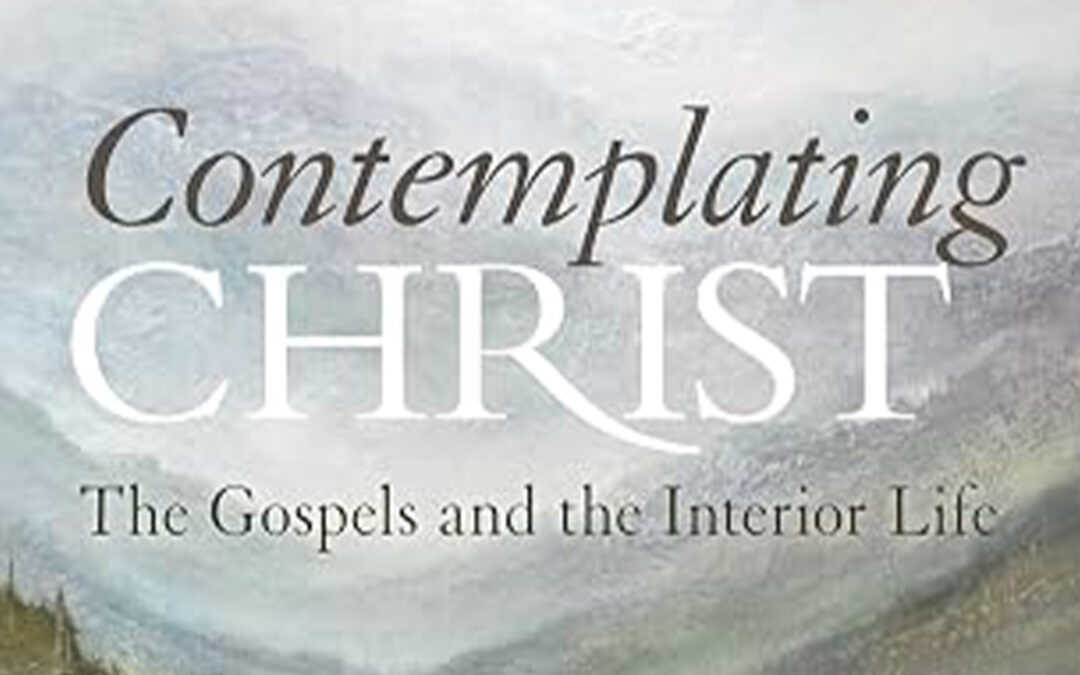
Bibliophiles are familiar with the well-trod adage “Don’t judge a book by it’s cover.” Vincent Pizzuto’s Contemplating Christ: The Gospels and the Interior Life proclaims, “Don’t judge this book by it’s spine.” Notably small yet densely laden, this book is both a theological feast and a newly opened window on the bibliosmia of Gospel scholarship.(1)
Between the two significant bookends of the Gospel narratives—the incarnational act of the nativity and the redemptive act of the passion and resurrection—the resurrection has always received theological precedence as the climax of the eschatology of salvation.(2) This has weighed our theology toward salvific atonement, placing the action of God outside ourselves to be received and taken on affirmatively. Pizzuto’s work in Contemplating Christ places a finger on the theological scale, giving due weight back to the incarnation, rebalancing and reorienting the contemplative perspective toward the in-breaking of the work of God in our souls and our deification as we wrangle with the interior life.(3)
While notable historical champions of the interior life inspire the text, Pizzuto’s overarching thesis points to the universality of our capacity to all be contemplatives, to all engage the mystical life as we live and move and have our being within Christ (Acts 17:28).(4)
It must be granted that Pizzuto’s warning at the beginning of the text to slowly digest the book is a fair and just warning, spoken not in boisterous pride, but in love and humility. This small yet effective book is a must in any contemplative’s library.
1. Bibliosmia is the technical term for the smell of old books, most notable in libraries. It has notes of vanilla, tobacco, and dust.
2. The eschatology of salvation is the timeline of the redemptive acts of God throughout history: from creation, the exodus, the birth of Christ, his passion and resurrection, all the way to the end times. It is the narrative thread on which scripture is tied. This is most notably experienced in the service of the Great Vigil of Easter.
3. The process by which we become whole and holy, like God but not a god. Canon Emily Bruner notes that the non-capitalization of this word is key.
4. Such champions would include Saint Theresa of Avila, Saint John of the Cross, Saint Ignatius of Loyola, and Saint Francis of Assisi.