
Five months ago, I had never heard the name Thomas Merton. I was in a tender season of healing when I was invited to join a pilgrimage to the Abbey of Gethsemani. Preparing for the journey, I began reading Merton’s Thoughts in Solitude. As I read, I sensed the deep value of solitude, yet I wasn’t sure how to integrate it into my life. Silence had always felt uncomfortable for me. I found myself conflicted: solitude is good, but I also cherish companionship and community. I wondered how those two longings might ever find harmony.
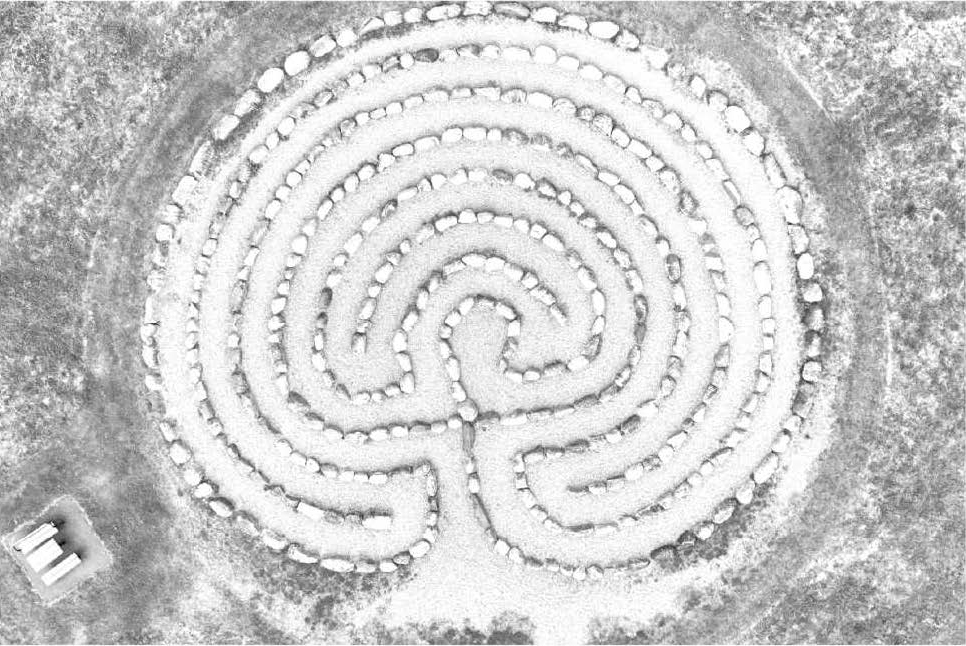
Over the summer, contemplative practice within community became a source of comfort. I attended World Labyrinth Day at the Ayres Center for Spiritual Development in Sewanee. That experience was truly transformative. Walking the labyrinth with others, I felt how shared silence could be grounding rather than isolating. I began to see how contemplation and community could meet. That insight led me to facilitate a Summer Solstice labyrinth walk for my parish, where I witnessed my faith community embrace contemplation together. Those moments stirred something new in me, a desire not only to practice contemplation, but to help others encounter it. And in God’s perfect timing, an opportunity to learn more is emerging as our diocese prepares for the Contemplative Practice Symposium. Knowing that such formation is being offered feels like a gentle affirmation of the path unfolding before me.
Our pilgrimage to Gethsemani, postponed from April to August, also arrived in God’s perfect timing. By late summer, I was further along in my healing and faith journey than I had been in early spring. I was more open and grounded in the quiet work God had been doing within me. There was no way to know what the experience would hold, yet our time together in prayer was luminous. The structure of the pilgrimage was simple and beautiful: shared meals, shared silence, shared prayer. Twice a day we gathered for Centering Prayer; complete silence, yet deeply together. In those quiet sessions, we seemed to relax into the silence, discovering how natural it can feel to be quiet together. The communal stillness held us. It was steady, warm, and spacious. The silence was no longer empty. It was full of breath, intention, and God’s nearness.
Alongside communal prayer, I spent many hours alone with my thoughts, reflections, and prayers. I continued to learn the delicate balance between solitude and community. In those stretches of quiet, I began to notice how solitude asks something different of me than shared silence does. It invites a person to sit with themselves without distraction and listen for God in the small movements of the heart. At times the stillness felt challenging, even restless. But there were also moments when it opened into a gentle clarity. A sense of being accompanied even when no one else was near. Walking the grounds slowly, letting the rhythm of each step become its own kind of prayer, revealed how solitude can deepen the very connections cherished in community. The more quiet and present I became, the more attuned I felt when we gathered again. Solitude was not pulling anyone away; it was preparing us to return with fuller hearts.
The pilgrimage invited each of us into a rhythm that felt both ancient and deeply human. Moving between shared prayer and personal reflection, we began to sense how the monastic pattern shapes the inner life. Silence that strengthens community and community that supports solitude. The landscape itself seemed to participate in this rhythm, the rolling hills, the quiet paths, the steady bells marking the hours. In this setting, solitude became less about being alone and more about being attentive. Community became less about activity and more about presence. Together these movements formed a kind of spiritual breathing, drawing us inward and outward in gentle alternation.
Walking the grounds where Thomas Merton walked and prayed was profound beyond words. We visited the spaces where he lived and wrote in solitude, spaces that felt especially holy. Yet as Br. Paul reminded us, Merton did not live in complete isolation. He ate daily meals in community with his brother monks, welcomed guests, and shared his wisdom generously. His life held both solitude and community, evolving over time.
The monks of Gethsemani embody this rhythm still: praying together throughout the day, sharing meals, and honoring silence and solitude. In many ways, their life mirrors the structure of our pilgrimage.
One of the great gifts of the journey was Br. Paul himself. He is a gentle and luminous soul, a gifted writer and poet. And he was a gracious guide who brought Merton’s spirit into community.
As I continue to reflect on our pilgrimage, what stands out most is how the experience revealed new possibilities for serving God and community through practices of stillness. Centering Prayer, labyrinth walking, and other contemplative disciplines offer gentle ways for people to pause, breathe, and listen for God’s presence. These practices create spaces where anyone can step into quiet, whether alone or alongside others, and discover how silence can become a shared gift.
By the end of the pilgrimage, the question that first stirred back in March no longer felt like a tension to solve but a mystery to inhabit. Solitude and community had settled into a kind of shared breath. One drawing inward and the other opening outward. Each of them completing the other. In that gentle rhythm, God’s presence felt steady and near. Inviting a way of life shaped by attentiveness, compassion, and quiet joy. The journey continues, not only for me, but for all who walk this contemplative path.
Elizabeth lives in Oak Ridge, Tennessee, where her professional work supports noncustodial parents in overcoming employment barriers, building stability, and strengthening relationships with their children. This work in family support informs the compassion and attentiveness in her creative expression. New to publication, she writes from a deep interest in spirituality, care, and the restorative power of stillness. This submission marks the beginning of a more intentional creative practice.